


Live fleet map & service visibility
Monitor vehicles, routes and disruptions in a shared map, with status indicators, fleet counts, clustered markers and filters for vehicles, operators, lines and events.
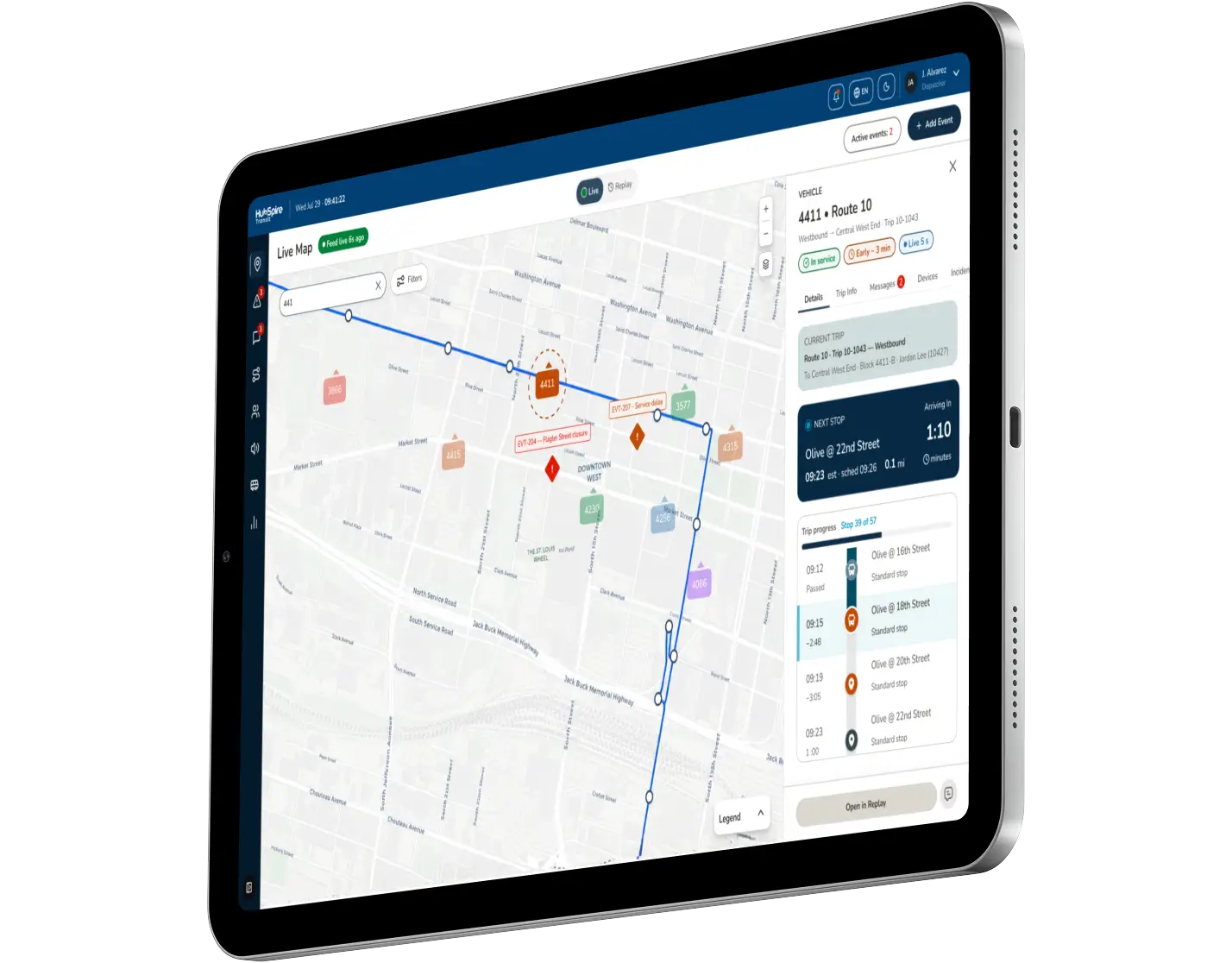
Monitor vehicles, routes and disruptions in a shared map, with status indicators, fleet counts, clustered markers and filters for vehicles, operators, lines and events.
Inspect a vehicle’s available status and service information without leaving the map. Keep vehicle, journey and event information consistent across operational views.
Review recorded vehicle activity around an incident, with playback controls and a clear distinction between live operations and historical information.
Define routes using established network data and connect approved changes with scheduling services. Make dependencies on route, stop and schedule systems explicit.
Manage disruptions to vehicle and driver assignments, review driver states and coordinate qualified relief resources with the relevant operational teams.
Bring sign-on, sign-off, availability and configured hours-limit indicators into crew oversight, with warnings and assignment rules defined by the agency.
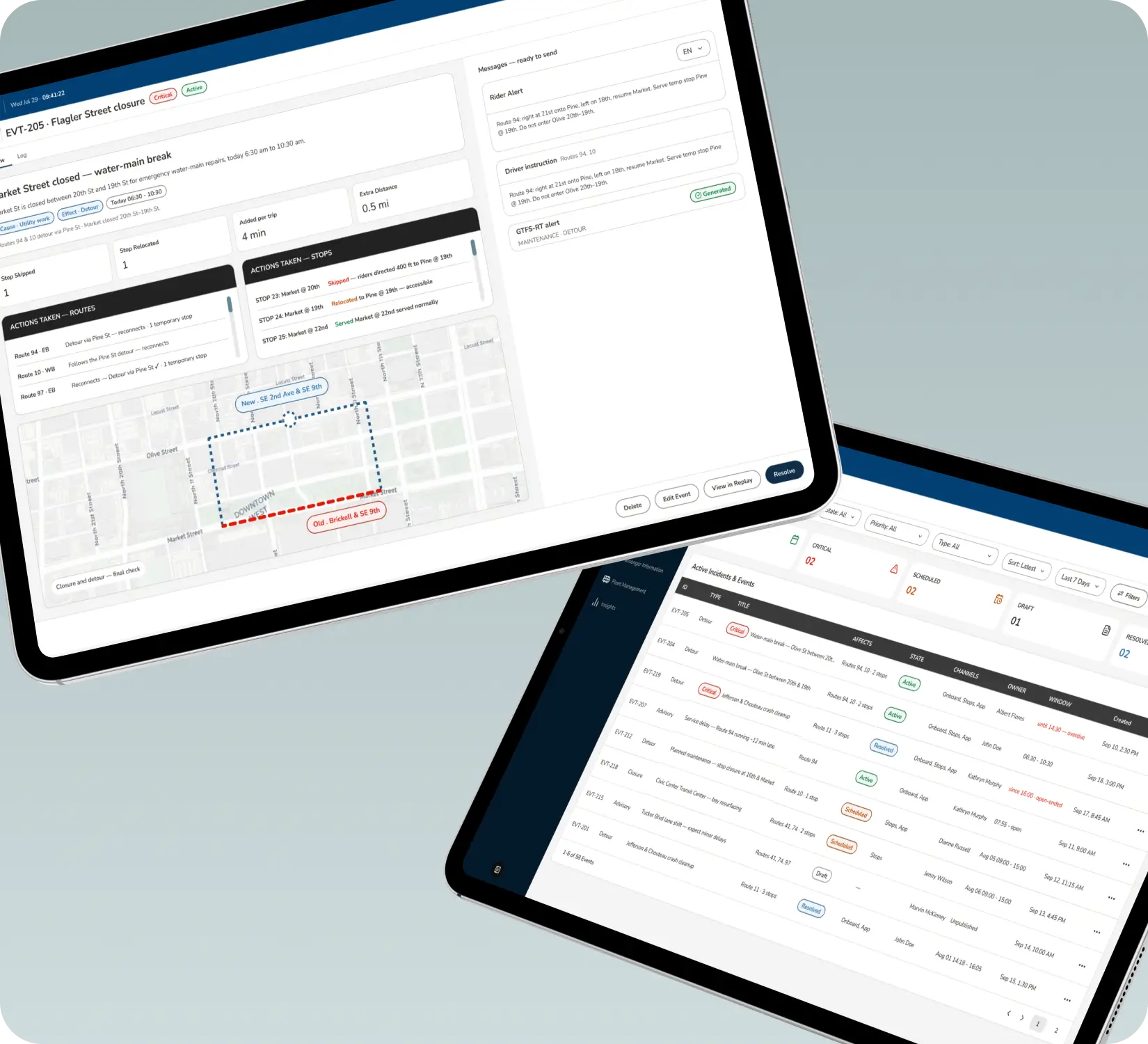
Build detours around established stops and links. Review affected vehicles, trips and stops, proposed stop actions and available time or distance impacts before publishing.
Manage draft, scheduled, active and resolved events. Prepare changes to published events through a controlled draft, with history and accountability retained.
Send targeted or group messages with appropriate priorities. Track queued, sent, delivered and acknowledged states, and make communication history searchable.
Target relevant passenger-information devices and channels, review delivery results, and clear or replace incident messages. Apply configured approval and override permissions.
Surface available health and fault information for onboard equipment, with drill-downs to affected vehicles, connection status and reported diagnostic details.
Filter reports by service period, operator, line, stop or trip. Align access with operational roles and preserve traceable actions across hardware and back-office integrations.
Development Experience
We are currently developing a dispatcher application for a transit operations program through a prime delivery team. The scope spans fleet visibility, historical replay, crew coordination, events and detours, communications, device health and operational reporting. The work connects the control-room experience with existing operational services.
Discuss our design approachHow we approach your program
Map vehicle and crew states, event lifecycles, publishing permissions and dependencies across dispatch, driver and passenger-information systems. Audit existing interfaces and recover missing documentation where needed.
Specialists direct agents across workflow components and test preparation. Agile demonstrations keep dispatcher feedback close to development.
Check live-versus-replay states, event updates, reassignment conflicts, broadcast approvals and queued messages. Engineers verify cross-view consistency, permissions and audit behavior.
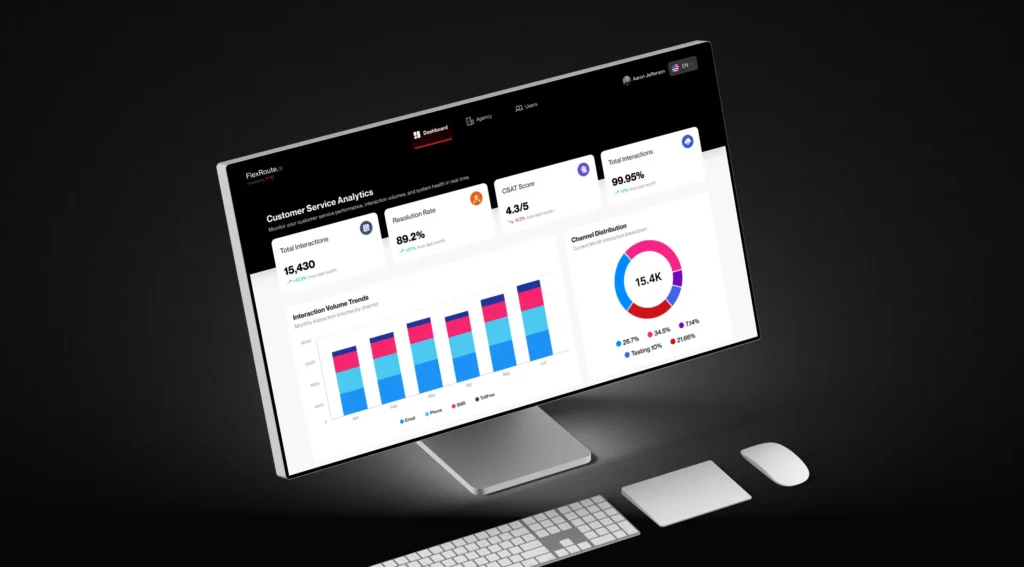
FlexRoute.AI bridges multi-platform systems into a secure, multi-tenant contact center operations and analytics hub, standardizing performance tracking and automating compliance.
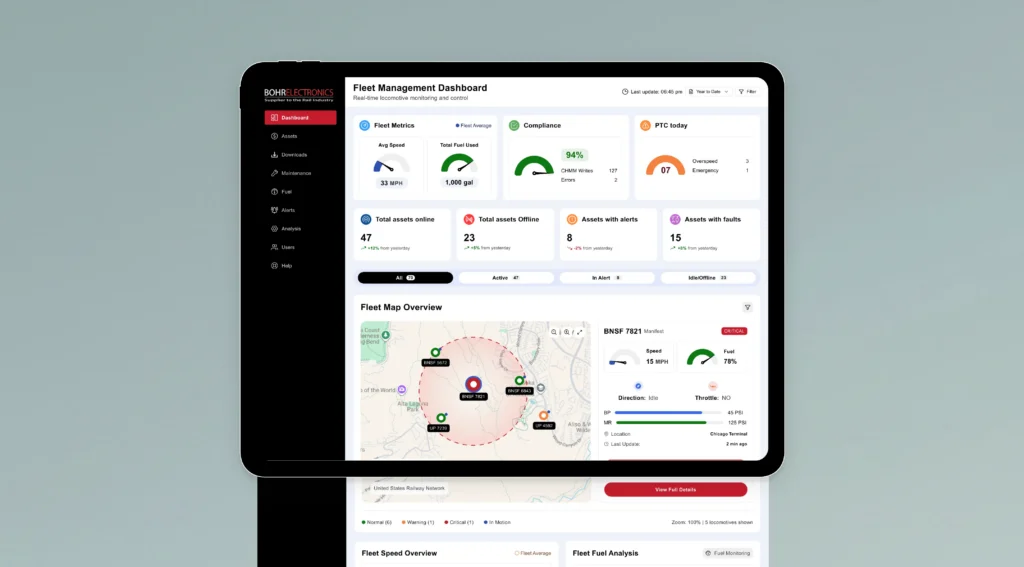
Bohr RailConnect is a cloud-native SaaS telematics platform built with HubSpire to ingest real-time locomotive IoT sensor data, optimizing fuel efficiency and maintenance for railway operators.
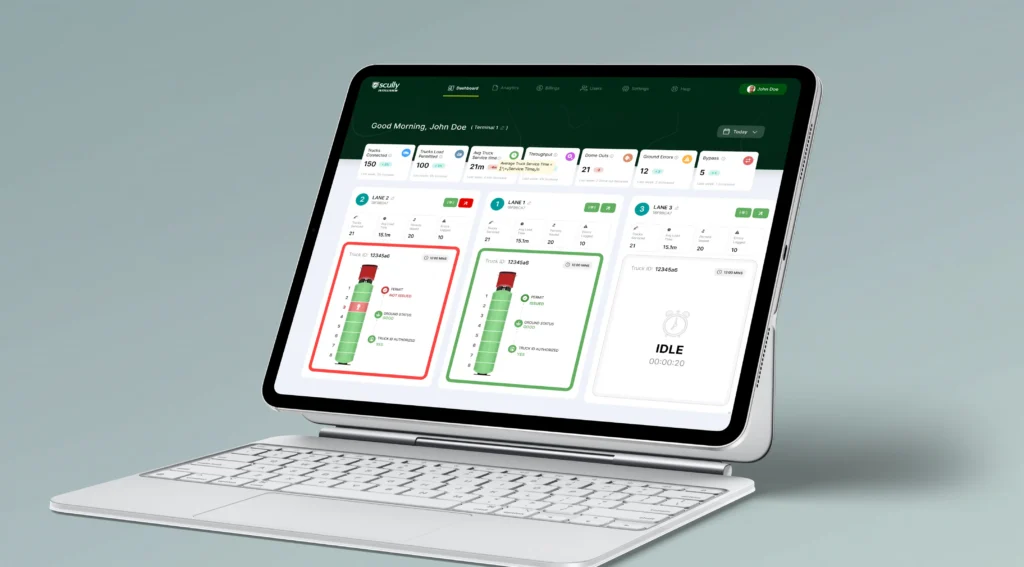
IntelliView 4.0 is a cloud-based SaaS platform providing terminal operators with real-time lane monitoring and intelligent analytics to optimize loading efficiency and minimize operational downtime.
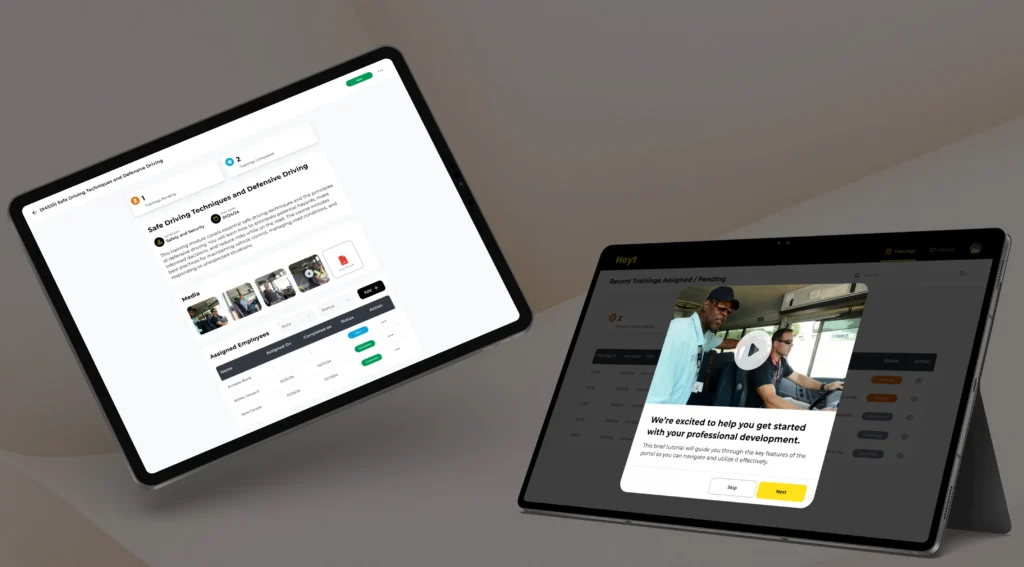
A unified digital ecosystem with dedicated Admin and Employee portals that centralizes workforce operations, compliance training, route distribution, employee engagement, and recruitment.

PTLS is a digital logistics platform that connects shippers, dispatchers, trucking companies, drivers, and pilot vehicles through automated bidding, job management, payment processing, and real-time tracking.


